What 1910.178(g) requires
| Paragraph | Requirement |
|---|---|
| (g)(1) | Battery charging installations located in areas designated for that purpose |
| (g)(2) | Facilities for flushing and neutralizing spilled electrolyte, fire protection, protection of charging apparatus from damage by trucks, and adequate ventilation to disperse fumes from gassing batteries |
| (g)(4) | A conveyor, overhead hoist or equivalent equipment for handling batteries |
| (g)(5) | Reinstalled batteries properly positioned and secured in the truck |
| (g)(6) | A carboy tilter or siphon for handling electrolyte |
| (g)(7) | When charging, acid poured into water, never water into acid |
| (g)(8) | Trucks positioned and brakes applied before changing or charging batteries |
| (g)(9) | Vent caps working, and battery or compartment covers open to dissipate heat |
| (g)(10) | No smoking in the charging area |
| (g)(11) | Precautions against open flames, sparks or electric arcs |
| (g)(12) | Tools and other metal objects kept away from the top of uncovered batteries |
The eyewash rule
29 CFR 1910.151(c) applies wherever the eyes or body of any person may be exposed to injurious corrosive materials. It requires suitable facilities for quick drenching or flushing of the eyes and body within the work area for immediate emergency use. Battery electrolyte is sulfuric acid, so a charging room where people water, top up or handle batteries is the usual place this rule shows up in a warehouse. The rule text sets the outcome, not a product model, so the station needs to be close enough to use immediately.
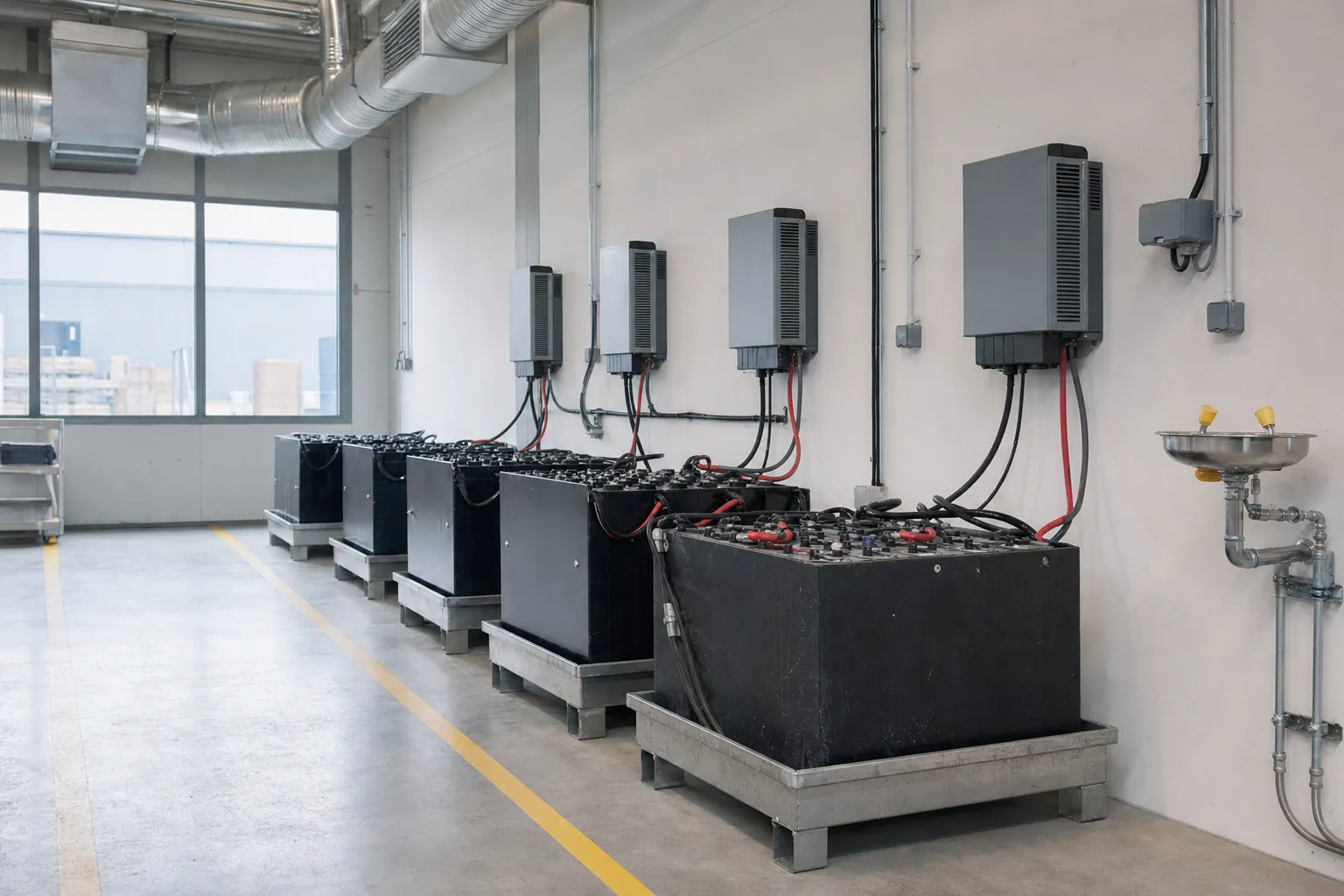
Where the charging room meets Tier II
The charging room is often where a site's Tier II numbers come from. Every battery on a stand counts toward the sulfuric acid total, along with the batteries in trucks. EPA's lead acid battery memo says the acid in all batteries is added to any other sulfuric acid at the facility, so electrolyte kept in carboys for topping up counts too.
- Count: the batteries in trucks plus spares on stands plus electrolyte stock, on your highest day.
- Location: Tier II asks for the precise location of each chemical, and the charging room is a natural entry. You can attach a site plan (40 CFR 370.42(s)(11)).
- Fire department: once you file, the fire department can ask to inspect the site and for the specific locations of hazardous chemicals (40 CFR 370.65).
The battery calculator turns a battery count into pounds of acid.
A short charging room checklist
| Item | Rule |
|---|---|
| Area designated for charging | 1910.178(g)(1) |
| Spill flushing and neutralizing supplies, fire protection, charger protection, ventilation | 1910.178(g)(2) |
| Hoist or conveyor for battery changes | 1910.178(g)(4) |
| Carboy tilter or siphon for electrolyte | 1910.178(g)(6) |
| No smoking, no open flames or sparks | 1910.178(g)(10), (g)(11) |
| Eyewash and body flushing within the work area | 1910.151(c) |
| Batteries and electrolyte counted for Tier II | 40 CFR 370.10, EPA battery FAQ |
OSHA compliance is outside our filing service, but the battery and electrolyte count we build for Tier II comes from the same room.
Common questions
Does OSHA name a specific eyewash standard?
The text of 1910.151(c) requires suitable facilities for quick drenching or flushing of the eyes and body within the work area for immediate emergency use. It does not name a product in that paragraph.
Do spare batteries on chargers count for Tier II?
Yes. Every battery on site counts toward the sulfuric acid total, along with electrolyte kept for topping up.
Is smoking allowed in a forklift battery charging area?
No. 29 CFR 1910.178(g)(10) prohibits smoking in the charging area, and (g)(11) requires precautions against open flames, sparks or electric arcs.
We build the battery and chemical inventory, check every threshold and file in your state's system. $950 a site per year, $750 a site from the third site. State fees extra.
Get a quote